A Commission For You. A Markup For Them.
Updated: Aug 22
What Dynamic Currency Conversion actually costs customers, and what it's worth to merchants
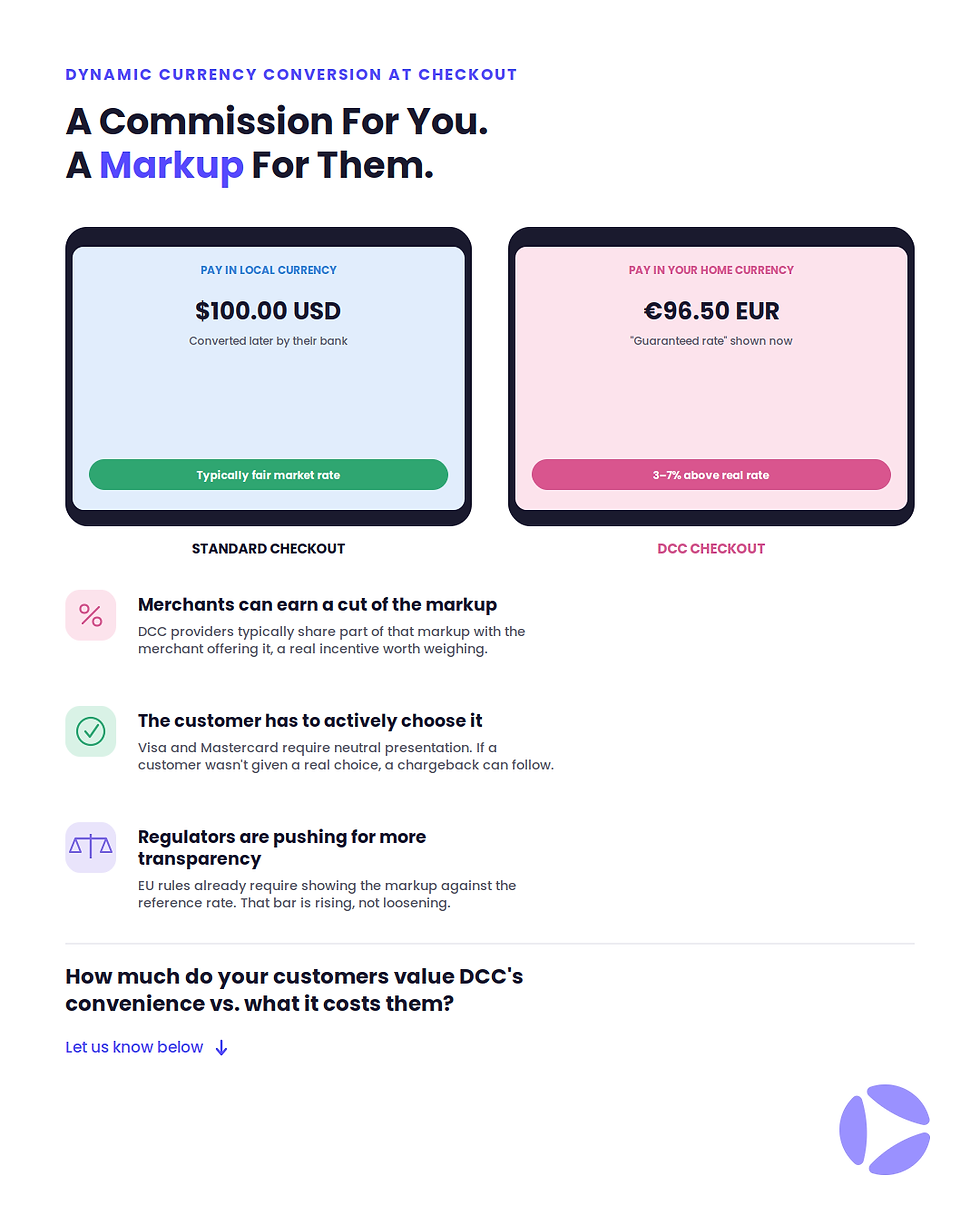
Dynamic Currency Conversion can pay merchants a commission on every international sale. It's also one of the fastest ways to lose customer trust if handled carelessly. Here's the actual tradeoff.
DCC Looks Like A Convenience. It's Also A Markup.
Letting a customer pay in their home currency at checkout sounds like a win: no surprises on their statement, no guessing what the exchange rate will be later. But the exchange rate used in a DCC transaction typically carries a markup of 3 to 7 percent over the real interbank rate, sometimes higher in less transparent implementations, and most customers have no easy way to know that markup is there.
Merchants Can Earn A Cut Of That Markup
DCC providers typically share a portion of the markup with the merchant offering the service. That's a real financial incentive to turn DCC on, and it's exactly why it's worth thinking carefully about whether that revenue is worth the trust it can cost with international customers who eventually notice the rate wasn't competitive.
The Customer Has To Actively Choose It, Not Get Defaulted Into It
Visa and Mastercard rules require DCC to be presented neutrally, giving the customer a genuine, informed choice between paying in their own currency or the merchant's local currency. If a customer wasn't actually given that choice, or wasn't given it clearly, their card-issuing bank has the ability to pursue a chargeback against the merchant on their behalf.
Regulators Are Pushing For More Transparency, Not Less
EU payment rules already require showing the DCC markup against the official European Central Bank reference rate before a customer confirms the transaction. That transparency requirement is a strong signal of where this is headed more broadly: the bar for disclosure is rising, not loosening.
The Takeaway
How much do you think your customers actually value DCC's convenience, versus what it's quietly costing them? Most merchants have never actually weighed that trade-off from the customer's side; they left the feature on because a provider recommended it, not because they ran the comparison.


Comments